
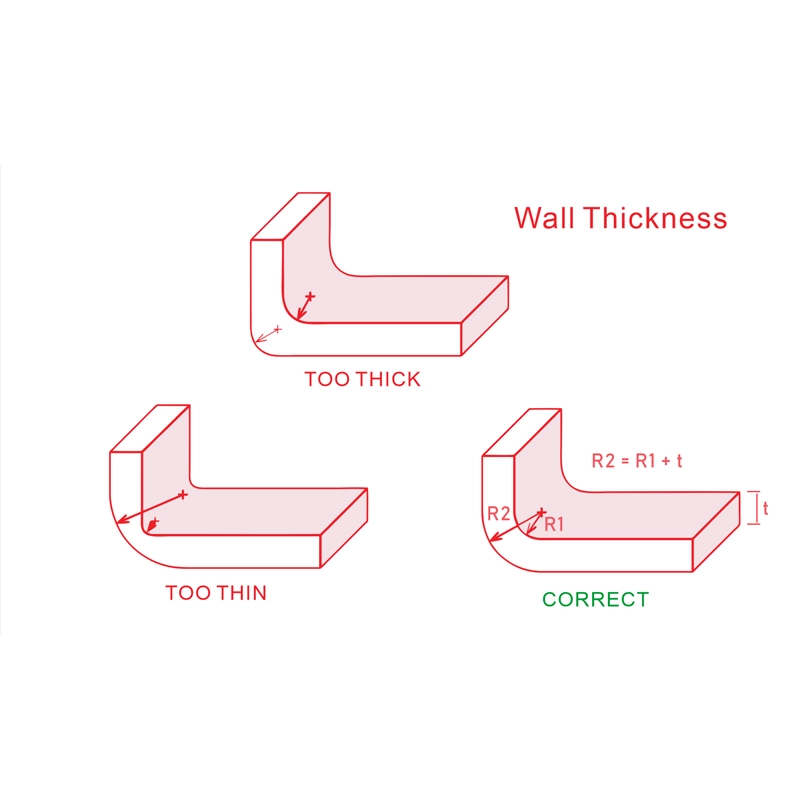
At LSRmold, we help design teams and procurement managers optimize part geometry so molded components are strong, repeatable, and cost-effective. Wall thickness is one of the single biggest levers you control during design — it governs structural strength, cycle time, warpage risk, material usage, and overall manufacturability.
Importance of Uniform Wall Thickness
Uniform wall thickness is the cornerstone of predictable molding. When wall sections change abruptly, you create areas that cool and shrink at different rates. That differential cooling leads to:
- Warping and sink marks where thick-to-thin transitions concentrate shrinkage.
- Internal stresses that reduce fatigue life and cause dimensional instability.
- Short shots or flow hesitation when thin sections impede melt flow.
- Longer cycle times and flash where thick sections require extra packing and cooling.
The practical rule for DFM is: design to constant wall thickness where possible, and when transitions are necessary, taper them with generous fillets and gradual thickness changes.
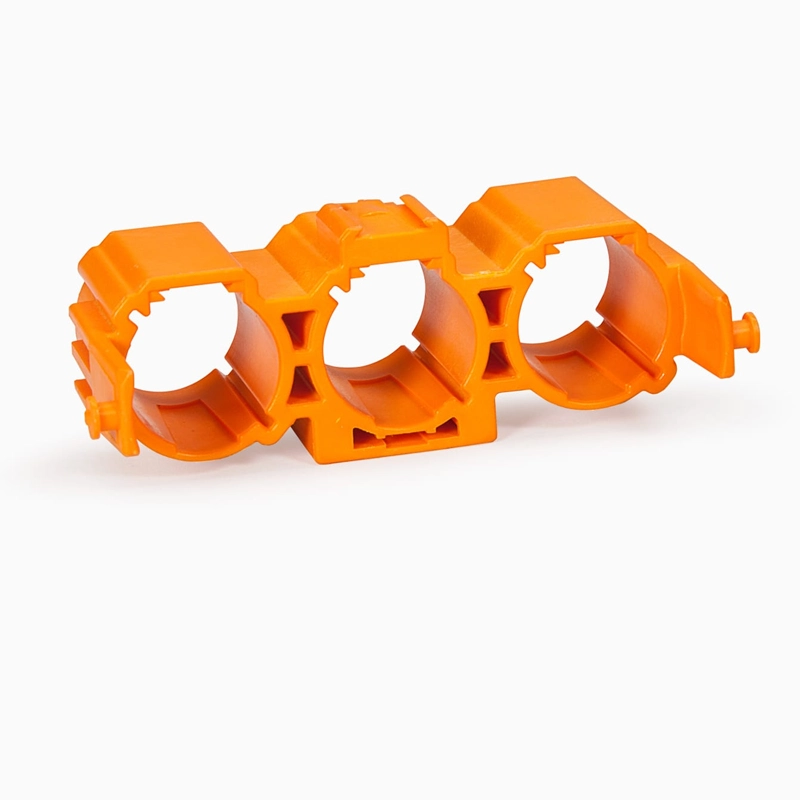
Recommended Wall Thickness in Injection Molding Design
While ideal thickness depends on material and part function, these design guidelines help balance strength, cost, and manufacturability.
- Very thin-wall parts (≤0.8 mm): used for lightweight consumer housings and thin packaging — requires high-flow materials and optimized gates.
- Typical consumer parts (1.5–3.0 mm): the sweet spot for many products — good structural stiffness, reasonable cycle times.
- Structural parts (3.0–6.0 mm): used where strength is primary; expect longer cooling and risk of sink unless engineered (use ribs/metal inserts).
- Very thick sections (>6 mm): generally avoid; use cores or design changes (bosses, ribs) instead.
Typical Recommended Wall Thickness by Material (quick reference)
- ABS: 1.5–3.5 mm
- Polypropylene (PP): 1.0–3.0 mm
- Polycarbonate (PC): 1.2–3.5 mm
- Nylon (PA): 1.5–4.0 mm (depends on glass-fill)
- POM (acetal): 1.0–3.0 mm
- PMMA (acrylic): 1.5–3.5 mm
- HDPE/LDPE: 1.5–4.0 mm
(These are starting points — always validate with mold flow and supplier data.)
Choosing Materials with Wall Thickness in Mind
Material selection and wall thickness are interdependent. Key considerations:
- Viscosity & flow: High-viscosity polymers (e.g., filled nylons) have worse flow, requiring thicker walls or additional gates.
- Shrinkage rate: Materials with higher shrinkage need consistent wall sections and appropriate packing to control dimensions.
- Impact vs. stiffness: Thicker walls increase stiffness but can reduce impact resistance for some plastics — material datasheets and supplier guidance are essential.
- Additives and fillers: Glass or mineral fills increase stiffness and thermal stability but raise viscosity and often require thicker walls or modified gate strategies.
When you consult suppliers, request flow curves and recommended wall ranges for the exact grade you plan to use.
Material Behavior and Additives
Adding glass or mineral fillers changes everything: tensile and flexural modulus go up, CTE (coefficient of thermal expansion) drops, but melt flow index drops too. That means:
- You can often design thinner walls for stiffness, but you must provide extra or larger gates and more injection pressure.
- Weld lines and surface finish can worsen; design to minimize flow-front meeting points in cosmetic areas.
- Anisotropy in mechanical properties: expect different strength along flow vs. across flow; place ribs and load-bearing features with this in mind.
Plasticizers, impact modifiers, and flame retardants each affect shrinkage and flow; always run a small mould-flow study with the selected compound.
Geometry Tweaks to Strengthen Walls
If your design calls for more strength without grossly increasing wall thickness, use geometry:
- Ribs: Thin ribs stiffen a wall; the rule of thumb is rib thickness ≈ 0.5–0.6 × nominal wall thickness and height ≤ 3× wall thickness to avoid sink.
- Bosses: Keep bosses to the minimum diameter and use supporting gussets; avoid placing bosses directly opposite thin exterior walls.
- Fillets: Large radii at transitions reduce stress concentration and improve melt flow.
- Draft angles: Ensure adequate draft for ejection; shallow walls with insufficient draft can distort.
- Honeycomb or lattice sections: For large panels, internal lattices preserve stiffness while lowering material use and cooling imbalances.
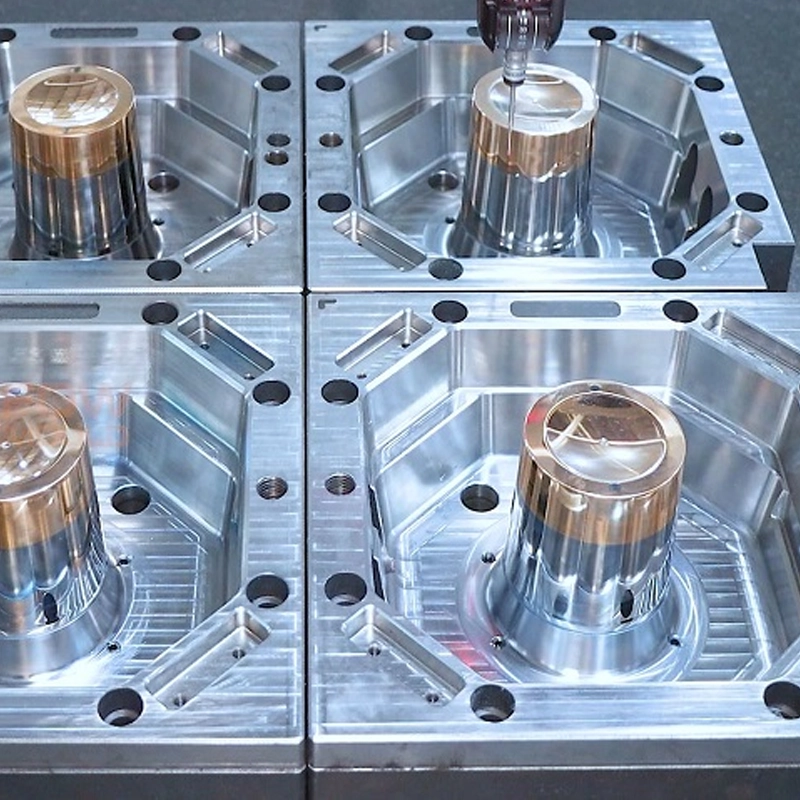
Design for Manufacturability (DFM) Feedback
A robust DFM cycle with your tooling partner saves time and money. Typical DFM steps include:
- Early wall-thickness review: LSRmold’s engineers (and your moldmaker) will recommend target wall ranges based on selected material.
- Mold-flow simulation: Predict fill, pack, and cool to locate thin spots, weld lines, and potential sinks.
- Prototyping and iteration: Rapid tooling or 3D-printed prototypes validate feel and fit before committing to steel tooling.
- Tooling design for cooling: Balanced cooling channels and uniform cavity wall contact reduce cycle time and warpage.
- Pilot runs and measurement: First-run SPC (statistical process control) validates target tolerances and pinpoints needed mold edits.
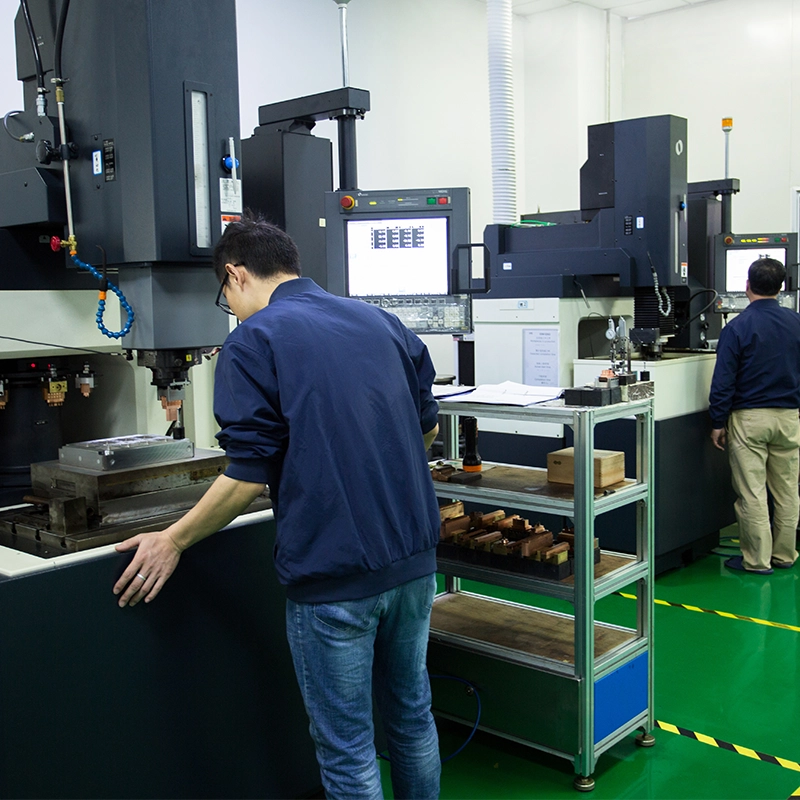
Bringing tooling, molding, and part design expertise together as a one-stop service shortens development lead time and improves transfer to volume production.
Summary
Wall thickness is not just a number — it is a multidimensional design decision that affects strength, consistency, aesthetics, and cost. Aim for uniform thickness, pick material-specific target ranges, and use geometric features (ribs, fillets, lattices) to meet structural goals without creating thick masses that cause sink and warpage. Partnering early with experienced custom tooling and mold manufacturers lets you iterate quickly, validate with simulation, and hand off to production with confidence.
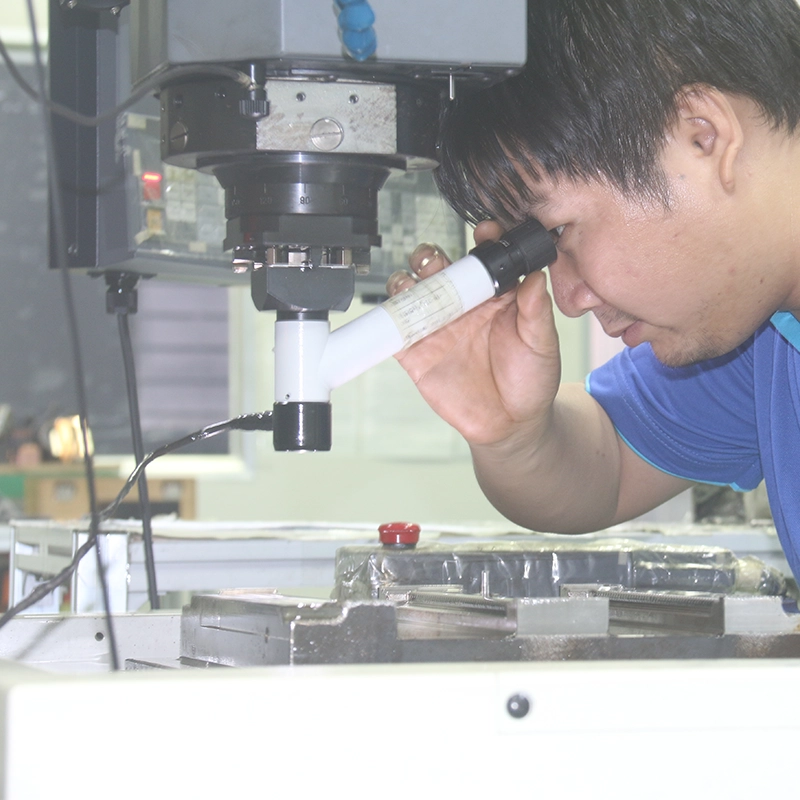
If you’d like a wall-thickness review for a current design, our team at LSRmold offers DFM consulting, custom tooling, and full OEM service — from prototype molds to high-volume manufacturing. Share your CAD files, target materials, and production volumes and we’ll provide constructive design feedback, mold options, and a quotation. Let’s optimize your part for strength, consistency, and cost together.